Building Relational Capital
A Workshop for Healthcare Executives
Workshop Proposal · For Healthcare Executives

A system is only as strong as its relationships.

A one-day workshop and individual coaching that develops relational capital as a managed asset. Built for the executives who run healthcare organizations.

Request a Proposal
The Nine Hospitals

What actually predicts how quickly patients recover?

Length of stay comparison Hospitals with strong team coordination had length of stay cut by more than half compared to hospitals with weak coordination, at the same operations, equipment, and payments. HOSPITAL LENGTH OF STAY Weak team coordination Baseline stay Strong team coordination Cut by half 53% shorter Length of stay, joint-replacement recovery Nine-hospital study. Same operations, same equipment, same payments. Gittell et al., Medical Care 38(8), 2000.

When a team of researchers set out to understand why some hospitals send surgical patients home sooner than others, they expected the answer to lie in staffing levels, case volume, or technology. Across nine hospitals, it was somewhere less obvious.

The strongest predictor of how quickly patients recovered from joint replacement surgery turned out to be the quality of the working relationships among the surgeons, nurses, therapists, and case managers responsible for their care. Where those people communicated often, held goals in common, and treated one another with respect, length of stay fell by more than half, even though the operations, the equipment, and the payments were the same.

The one thing that changed was how well the team functioned as a team, and that alone reshaped the cost of the care.

The Cost of Doing Nothing

What frayed relationships are already costing your system.

$4.6B
Lost each year to physician burnout, driven heavily by frayed workplace relationships. Han et al., 2019.
40%
Of clinicians still witness rules broken at least weekly. The problems people won’t raise. Silence Kills 2.0, 2026.
18–24%
Of cross-boundary effort is lost to friction where no one owns the relationship. Cross, network research.
2x
Longer length of stay in hospitals where teams don’t coordinate. Same operations, equipment, and payments. Gittell et al., 2000.
The Solution

A one-day workshop, plus six months of individual coaching.

Three components. Each trains a practical skill the evidence identifies as decisive, and each carries a measurable return.

01

Build an intentional relational culture inside the team.

Leaders learn how to connect deliberately with their people, and, more importantly, to create the conditions in which their people connect with one another. Stronger relational coordination tied to a 53% reduction in length of stay across a nine-hospital study. Gallup finds the most engaged units are roughly 23% more profitable and 18% more productive, and the manager alone accounts for about 70% of the variance in engagement.

02

Build partnerships across departments and sectors where you hold no formal authority.

Most of what a system is worth lives in the spaces between its parts: shared services, coordinated referrals, a medication process that runs across four departments. Rob Cross’s two decades of network research show disciplined attention to cross-boundary work recovers 18 to 24% of the effort otherwise lost to friction. The leader who can build agreement without a mandate is how lost value becomes captured value.

03

Hold tension and raise hard truths without breaking the relationship.

An organization can only face the problems its people are willing to raise. Silence Kills 2.0 found teams that fully confront such issues show 16% higher engagement, 12% better retention, and 30% lower intent to leave. The conversations people most avoid, about mistakes, bias, and incompetence, are exactly the ones most tightly linked to clinical and organizational outcomes.

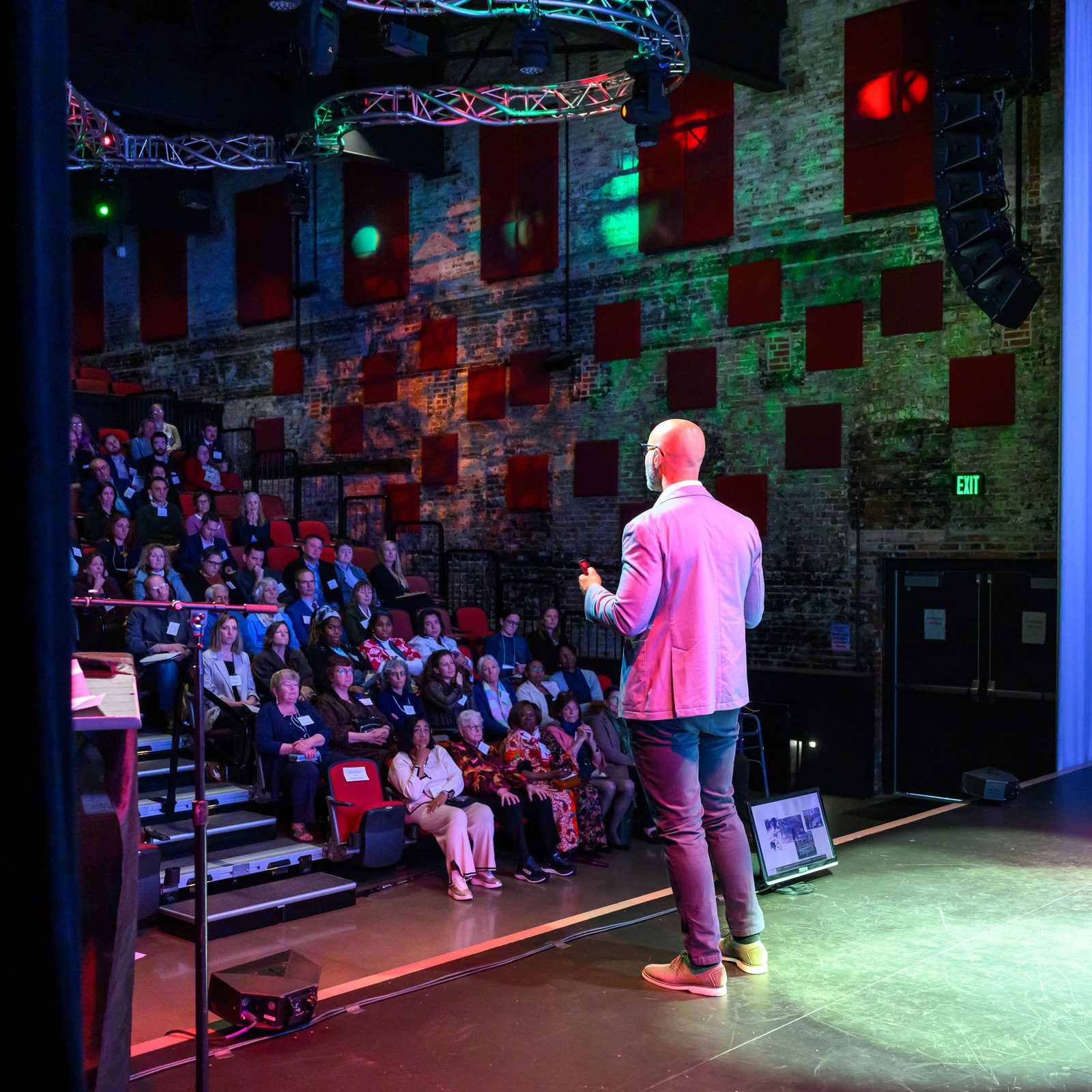
Dr Pedja Stojicic teaching a full room of leaders from the stage
Who it’s for

Healthcare executives and leaders.

  • C-suite executives running a hospital, system, or health plan.
  • VPs and senior leaders with cross-functional responsibility.
  • HR, People, and L&D leaders shaping leadership development.
  • Hospital, site, and departmental heads. Many, though not all, are clinicians.
Where this work has been built and tested
Jefferson HealthJefferson HealthPhiladelphia
Carilion ClinicCarilion ClinicVirginia
Trinity HealthTrinity HealthNational Health System
One Brooklyn HealthOne Brooklyn HealthNew York
Endowment for HealthEndowment for HealthNew Hampshire
Harvard T.H. Chan School of Public HealthHarvard T.H. ChanSchool of Public Health
Stanford MedicineStanford MedicineSchool of Medicine
Robert Wood Johnson FoundationRobert Wood JohnsonFoundation
Centers for Medicare and Medicaid ServicesCMSMedicare & Medicaid Services
The Commonwealth FundThe Commonwealth FundNational Philanthropy
The Rippel FoundationThe Rippel FoundationReThink Health
Healthcare Anchor NetworkHealthcare Anchor NetworkA National Collaboration
Leading Change NetworkLeading Change NetworkA Global Network
The Evidence

Relational capital, in numbers.

Thomas H. Lee, chief medical officer of Press Ganey, argues that trust, reciprocity, and teamwork are a genuine form of capital, and that leaders should build them with the same intensity and discipline chief financial officers employ managing budgets.

  1. 1
    53% shorter length of stay where surgical teams communicated often, held goals in common, and treated one another with respect. Same operations, equipment, and payments. Gittell et al., Medical Care, 2000.
  2. 2
    23% more profitable, 18% more productive in the most engaged units of 100,000+ teams. The manager alone accounts for about 70% of the variance in engagement. Gallup Q12 Meta-Analysis, 2024.
  3. 3
    18 to 24% of cross-boundary effort recovered when systems apply disciplined attention to work that spans departments, functions, and sites. Rob Cross, organizational network research.
  4. 4
    $4.6 billion a year is the estimated U.S. cost of physician burnout, driven heavily by frayed workplace relationships. Han et al., Annals of Internal Medicine, 2019.
  5. 5
    30% lower intent to leave, 16% higher engagement, 12% better retention on teams that fully confront problems others avoid. Silence Kills 2.0, American Journal of Critical Care, 2026.

Selected evidence. Full source list available on request.

Portrait of Dr Pedja Stojicic
Who leads it

Dr Predrag Stojicic, MD, MPH

Harvard T.H. Chan · Stanford Medicine
People Power Health · Boston, MA

A physician and a member of the Harvard faculty who holds an MD and an MPH from the Harvard T.H. Chan School of Public Health and teaches three transformative courses: Enabling Teams, Enabling Large System Change, and Narrative Leadership.

His method was developed inside institutions widely regarded as leaders in health system design, among them Trinity Health System, Jefferson Health, Carilion Clinic, the Robert Wood Johnson Foundation, and the Centers for Medicare & Medicaid Services, and refined with more than 500 senior healthcare leaders. The dynamics it addresses are common to complex health organizations wherever they operate.

MD, Belgrade · MPH, Harvard T.H. Chan · Adjunct Lecturer, Harvard · Former Director, The Rippel Foundation · Co-director, Harvard FXB Climate Fellowship · Advisory Board, Leading Change Network.

Engaged audience of clinicians at a Build Relational Capital Master Class

Most of what a system is worth lives in the spaces between its parts. This room is built to close that gap.

In Their Words

What leaders take with them.

“Over the past year, the voice of this nurse has traveled through over 150 countries. I am beyond grateful for the tools provided by Dr. Stojicic because due to them, that voice is mine. It is because of this training that I’ve discovered my true power.”
Amy Staley, BSN, RN-BC Patient Care Director, NewYork-Presbyterian / Weill Cornell LinkedIn →
“In a world where health care keeps becoming more fractured and corporatized, training that builds both community and self-agency in physicians is essential. Exploring the universal language of relationships with Dr. Stojicic gave me a fresh perspective: my work as a family physician already holds purpose at its core. I’m committed to using his tools to intentionally build a culture of community and purpose in my professional life.”
Marie-Elizabeth Ramas, MD, FAAFP Organizational Change Management Consultant LinkedIn →
“This training gave me something I haven’t got from any other leadership program: a very specific, concrete sentence to help me tie things together at the end of a meeting. I used it the next day, and it worked.”
Prof. Mary E. Black, FRCP, FFPH, MD, MPH LinkedIn →
At a Glance

Format and deliverables.

An engagement is commissioned by the organization and shaped to the system it serves. Every participating leader receives coaching. Cohorts are mixed by design.

Format
A single day, in person, followed by individual coaching for every participating leader.
Who it’s for
Executives and senior leaders across a system, from the C-suite to hospital, site, and departmental heads. Many, though not all, are clinicians.
Cohort design
Deliberately mixed across sites and departments, so relationships form along the very boundaries where value tends to leak.
What leaders leave with
A practiced method for all three capacities and a concrete plan to apply it the following week.
Start a Conversation

Tell us about your system.

A short note is enough. We’ll set up a discovery call within two business days to understand your organization and shape a proposal that fits.